Dragon’s tail shawl
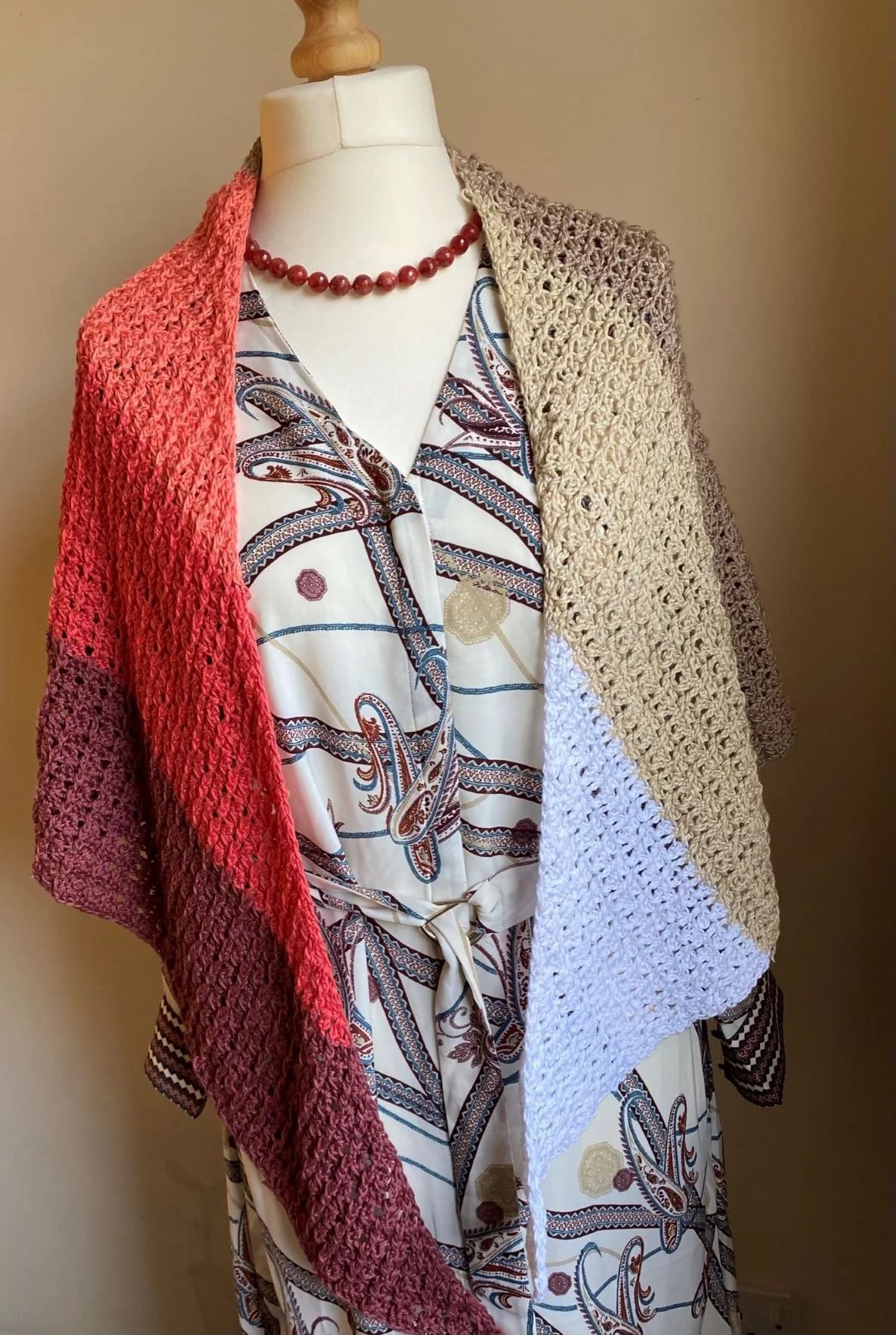
The Dragon’s tail shawl is an almost symmetrical shawl worked from one side to the other. It produces a very textured fabric and light lacy finish. It has 2 row repetition.
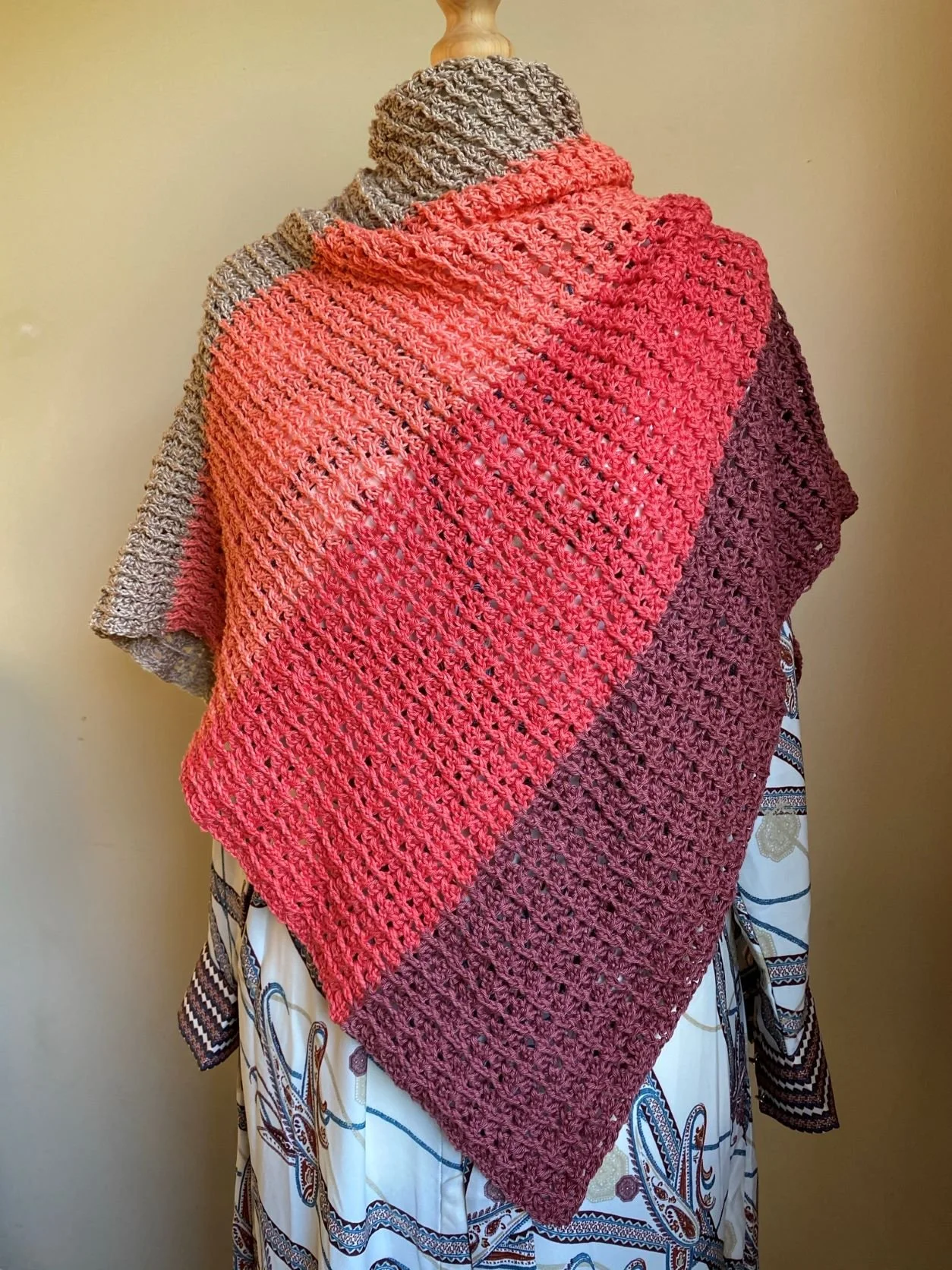
I hope you enjoy making it as much as I enjoyed creating it.
The shawl consists of 2 rows repetition. There are no special techniques or skills required for creating the shawl. Stitches required for completing the shawl are:
The basic shawl pattern is as follows:
UK
Tc, xtc, fptc, xtc, fptc, xtc, fptc, always ending with Tc
Tc, xtc, bptc, xtc, bptc, xtc bptc – always ending in tc
USA
Dc,xdc, fpdc, xdc, fpdc, xdc, fpdc, always ending dc
Tc, xdc, bpdc, xdc, bpdc, xdc bpdc – always ending in dc
The diagram for the base shawl pattern is as follows:
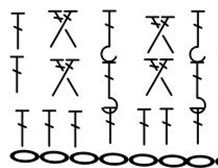
However, since we will be working on side to side shawl – the pattern is slightly changed, as we will increase only on one side and the other side will remain the same – with no increases to create straight edge. The pattern requires for the recreator to plan ahead.
The pattern is in both USA and UK terminology of which the UK terminology is marked in purple letters for your convenience when following.
Terminology – USA/UK
Stitches used and their abbreviations
USA Terminology
UK terminology
Chain – ch
Dc – double crochet
Xdc – skip one st, dc in the next stitch, dc in the skipped stitch in the previous row
Fpdc – front post double crochet
Bpdc – back post double crochet
Chain – ch
TC – treble crochet
Xtc – skip one st, tc in the next st, tc in the skipped stitch in the previous row
fptc – front post treble crochet
bptc – back post treble crochet
Yarn used
Scheepjes Catona shade 254 beige
Scepjes Catona shade 410 melon
Schepjees Catona shade 257 light beige
Schepjees catona shade 264 light coral
Schepjees catona shade 396 old rose
Schepjees catona shade 130 Off white
Hook 4.5mm
Written Pattern
Row
Front/ Back
Row pattern
USA terminology
Row pattern
UK terminology
Comment
1.
Back
Ch 4, 7 dc in the first stitch
Ch 4, 7 tc in the first st
2.
Front
Ch3, 2 dc in the first st,
fpdc, xdc, fpdc, xdc
dc in the last st
Ch 3, 2 tc in the st
Fptc, xtc, fptc, xtc
Tc in the last st
In this row we have made 2 ridges and 2 xdc/ 2 xtc
3.
Back
Ch 3, bpdc, xdc, bpdc, xdc, bpdc, dc,
3 dc in the last stitch
Ch 3,bptc, xtc, bptc, xtc, bptc tc
3 tc in the last stitch
In this row we make additional bpdc/bptc
We also have 1 dc/tc left
4.
Front
Ch 3, 2 dc in the first stitch, fpdc, xdc – repeat 2 times,
fpdc, dc in the last stitch
Ch 3, 2 tc in the first st, fptc, xtc – repeat 2 times
Fptc, tc in the last st
In this row we have made an additional fpdc/fptc and xdc/xtc
5.
Back
Ch 3, bpdc, xdc – repeat 3 times
3 dc in the last stitch
Ch 3, bptc, xtc, repeat 3 times
3 tc in the last stitch
In this row we have made additional xdc/ xtc
6.
Front
Ch 3, 2 dc in the first st
Dc
fpdc, xdc – repeat 4 times, fpdc
Dc in the last stitch
Ch3, 2 tc in the first sti
Tc
Fptc, xtc – repeat 4 times, fptc
Tc in the last st
In this row we have made additional fpdc/fptc and we have 1 dc /tc
7.
Back
Ch 3,
bpdc, xdc -repeat 5 times, bpdc, 3 dc in the last st
Ch 3
Bptc, xtc – repeat 5 times
Bptc , 3 tc in the last st
We have made an additional xdc/xtc and bpdc /bptc
8.
Front
Ch 3, 2 dc in the first st, xdc, fpdc – repeat 5 times,
fpdc,
dc in the last st
Ch 3,
2 tc in the first st
Xdc, fptc – repeat 5 times
Fptc,
tc in the last st
In this row we have made additional xdc /xtc
9.
Back
Ch 3,
bpdc, xdc – repeat 6 times
bpdc
dc
3 dc in the last st
Ch 3,
Bptc, xtc – repeat 6 times
Bptc
Tc
3 tc in the last st
In this row we have made additional bpdc /bptc
10.
Front
Ch 3, 2 dc in the first st
Fpdc, xdc – repeat 6 times
Fpdc,
Dc in the last st
Ch 3, 2 tc in the first st
Fptc, xtc – repeat 6 times
Fptc
Tc in the last st
In this row we have made additional xdc/xtc and fpdc /fptc
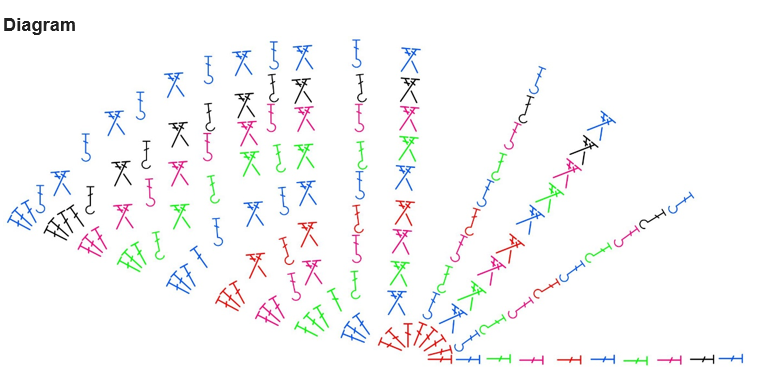
Diagram
The diagram shows the pattern very clearly. We can see that the only modifications are made on the side of the increase where we follow the pattern by creating a new xdc/htc or a ridge (fpdc/fptc, bpdc/bptc) depending on the side of the shawl.
We can conclude that there is a repetition in terms of the stitch we make addition to –
row 3 – ridge, 1 dc/tc left,
row 4 – xdc/xtc, ridge
row 5 – xdc/xtc
row 6 – ridge, 1 dc/tc left
We continue this like this until we reached the desired length.
I have worked as follows:
15 rows of off white
15 rows of light beige
15 rows of darker beige
15 rows of light coral
15 rows of dark coral
and 15 rows of old rose.
If you would like to shawl to be smaller you can just reduce the number of rows per colour – for instance 10 or 12 rows per colour.
If you would like to have one colour shawl or gradual shawl you can finish after 60 row as the shawl shown on the photos is very large.
If you are experiencing any issues with the pattern or need further guidance please email me on cosmicgdesigns@gmail.com – I will respond as soon as I can and we can arrange a face to face session (if necessary) to resolve the issue.
Regards
Gordana